If your car key won't turn in the ignition — or if it turns but the engine refuses to start despite a working key fob — you're probably not dealing with a key problem. You're dealing with an ignition barrel problem. And that's both good news and bad news.
The good news: ignition barrel repair is one of the most cost-effective fixes a mobile auto locksmith can do. The bad news: most drivers don't know it's an option, panic, and end up paying the dealer £400 to £800 for a job that should cost a fraction of that. This guide explains exactly what an ignition barrel is, what goes wrong with it, when repair beats replacement, and how Royale Car Keys handles the job at your location across London and Kent — usually same-day, often within a couple of hours.
The ignition barrel — sometimes called the ignition lock cylinder — is the cylindrical housing inside your steering column where you insert and turn your key. It's a precision-machined component containing a series of spring-loaded pins (or wafers) that align in a specific pattern when the correct key is inserted. When the pins line up, the cylinder rotates, electrical contacts engage, and the car starts.
In modern vehicles with transponder chips or smart keys, the ignition barrel still exists in most cases — it's just paired with electronic authentication. The mechanical lock and the electronic immobiliser both have to be happy before the engine cranks.
Two key reasons your ignition barrel matters:
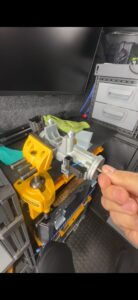 This is the question we get asked most often when customers call. Here are the diagnostic signs that point to a barrel problem rather than a key problem:
If you're unsure, call us first before deciding. Our technicians often diagnose the issue over the phone in under a minute, just by asking the right questions. There's no charge for diagnosis.
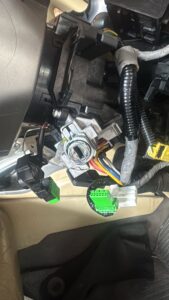 Ignition barrels don't fail randomly. Here are the typical causes we see at customers' locations:
1. Wear from age and use. The most common cause. Pins inside the barrel wear down after thousands of cycles. Eventually, they no longer align reliably with the key cuts.
2. Heavy keychain weight. A common culprit — especially with older Vauxhalls, Fords, and Renaults. Drivers attach 5+ keys, fobs, and dangly trinkets to the same ring. The constant tugging on the barrel during driving (potholes, road vibration, getting in and out) wears the internal mechanism prematurely. Best practice: keep your car key separate from your house keys.
3. Broken key in the ignition. If a key snaps inside the barrel, the broken stub damages the pin geometry. Even after extraction, the barrel often needs repair or replacement.
4. Attempted theft. A thief tries to "punch" or force-turn the ignition. Even if the theft fails, the barrel is usually destroyed in the process.
5. Manufacturing defects. Certain models have known weak ignitions — particularly older Mercedes (with a separate problem called Electronic Ignition Switch failure, which we cover in our Mercedes EIS Failure guide). Some VW Group cars from the 2000s also have weak factory barrels.
6. Moisture / debris contamination. Rare, but possible — especially in older convertibles or vehicles with steering column leaks.
This is where a good mobile auto locksmith genuinely saves you money. Many ignition issues that dealerships quote as "ignition replacement" are actually repairable for a fraction of the cost.
Royale Car Keys handles ignition barrel repair on-site in most cases — same day, at your location. Cost starts from £150 depending on vehicle and complexity.
Replacement is more expensive than repair because it includes the new part and (often) re-coding the new barrel to your existing keys or programming new keys to match. Cost varies significantly by vehicle.
If your problem is the electronic ignition switch (common on Mercedes-Benz models like W203, W211, W212, and W221) or the immobiliser system itself, the ignition barrel is fine — the issue is in the electronics. We diagnose this on-site and recommend the appropriate fix.
Here's exactly what happens when you call us for an ignition issue:
1. Phone diagnosis (free). We ask 3-4 questions to narrow down the problem before dispatching. About 20% of calls are resolved over the phone with a different fix — we don't dispatch a technician unless it's needed.
2. On-site arrival. Our technician arrives in a fully-equipped van with diagnostic tools, lock-cylinder service kits, and replacement parts for most major makes. Typical arrival across London and Kent is 30 minutes to 1 hour.
3. Inspection and confirmed quote. We physically inspect the ignition before quoting. The price you're given on-site is the price you pay — no surprise add-ons, no "we found another problem" upcharges.
4. Repair, replacement, or part ordering. Most jobs are completed same-day. Occasionally a specific part needs to be ordered (e.g. a less-common Mercedes module or a discontinued Vauxhall barrel). When that happens, we tell you upfront, give you a return appointment, and charge nothing until the job is done.
5. Warranty. All our ignition work is backed by a warranty that depends on the job — 6 months minimum, up to 2 years for major repairs and replacements. The exact warranty is confirmed in writing before work begins.
6. Payment. Card, cash, or bank transfer on the spot. Invoiced billing available for fleet customers.
Transparent flat-rate pricing, no hidden call-out fees:
For comparison — main dealer quotes for the same work typically range from £400 to £1,200 depending on make, model, and dealer. We routinely save Mercedes, BMW, Audi, and Range Rover owners hundreds of pounds on identical work.
Wondering what it actually costs? We've put together a dedicated, honest price breakdown — what moves the price up or down, dealer vs mobile vs DIY, and when a £50 key fixes it instead: see our Ignition Barrel Replacement Cost guide.
Our ignition repair service runs 24/7 across:
For our full coverage map, see our service area page.
How long does an ignition barrel repair take? Most repairs take 30 to 90 minutes on-site. Replacement jobs that require a new part can be longer — usually 1 to 2 hours, occasionally more for complex vehicles. Most jobs are completed same-day.
Will I be able to drive my car immediately after? Yes, in most cases. The car is fully tested before we leave, and you can drive away normally with your existing keys (or new keys, if those were part of the job).
Is the repair permanent, or will I have to redo it later? A proper barrel repair, done correctly, lasts as long as a new factory ignition would — typically several years. Our work is backed by warranty, so if anything fails within the warranty period, we return at no charge.
Can you repair Mercedes ignitions? Yes — including the notorious EIS (Electronic Ignition Switch) failures common on W203, W211, W212, and W221 models. We can repair almost all Mercedes ignition issues at your location, often same-day. Sometimes specific parts need to be ordered, in which case we'll let you know upfront.
Do you also install vehicle security to prevent ignition tampering? Yes. We install Ghost 2 and CAN Phantom immobilisers, which add a layer of electronic protection that makes ignition-tampering theft nearly impossible. See our Ghost 2 vs CAN Phantom comparison to learn more.
If your ignition is failing, don't keep forcing the key — every failed turn makes the damage worse, and a broken key inside the barrel is a much more expensive job than a worn pin.
For emergencies, call 07777 676261 or WhatsApp us on +44 7777 676261.
For non-urgent diagnostics, quotes, or to book a planned repair, use our contact form and we'll get back to you within the hour.